Introduction
Modern electrical equipment is being designed for ever improving levels of efficiency, power density and service life and as such the requirements of the magnet wire insulation systems have become more exacting than ever. Conventional enamels, for example polyurethane (UEW) and polyesterimide (EIW), are capable of fulfilling many of the systems requirements but are not always capable of withstanding the higher temperature and electrical stresses encountered in severe applications.
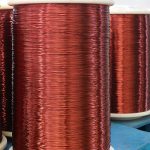
The PAI and PI coated round magnet copper wires are most innovative magnet wire that are now available in 2010. These wires can be used in high temperature motors and electric vehicle drive systems, aerospace equipment, wind generators and other challenging applications by combining the excellent mechanical properties of PAI and the high thermal stability of PI.
With a thermal class of 220 degreesC and enhanced properties of heat, wear, chemical and corona resistance, PAI and PI coated magnet wires have long since been the most popular option with manufactures for increased performance and durability.
What Are PI-Coated Round Magnet Copper Wires?
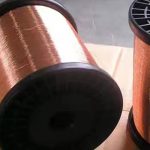
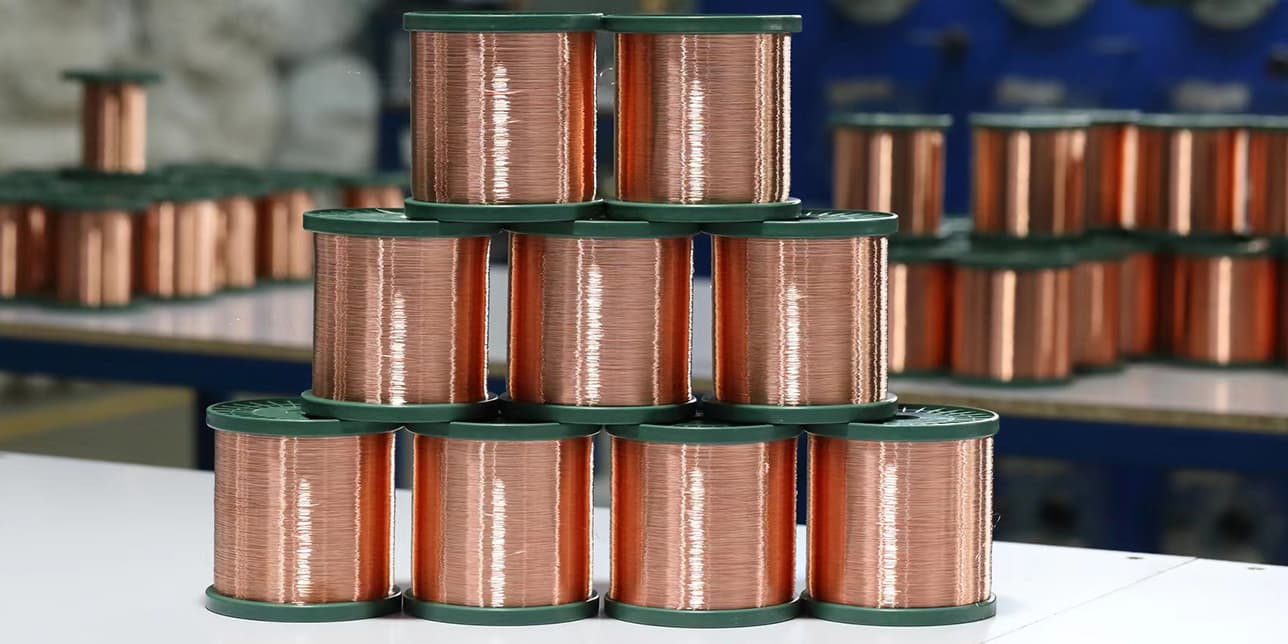
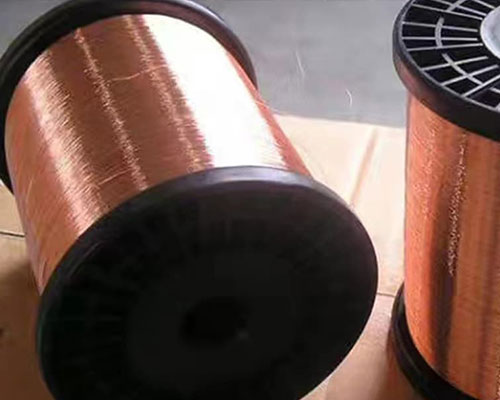
PAI (polyamide-imide) and PI (polyimide) coated round magnet copper wire are high temperature (above 200 degreesC) enameled copper wire insulation systems formed by high temperature aromatic polymer film coatings applied to the copper wire. They are used in motors, transformers and electromechanical devices. They are different round copper conductors and both have a carefully controlled film build applied in multiple coats cured in a high oven temperature to maximum temperature and chemical resistance.
However PAI and PI coatings rarely require more than NEMA MW 1000 thermal class 200 performance, while PAI has a thermal class 220–240. Both resist thermal cycling wear better than polyester or poly-imide wire against refrigerants and solvents, and many times better against repeat thermal cycling. SMC and RMC manufacturers use PAI and PI wire precisely in applications where winding failure caused by heat…not voltage stress…dictates the purchase spec, not just conductor gauge.
Typical Insulation Structure
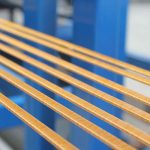
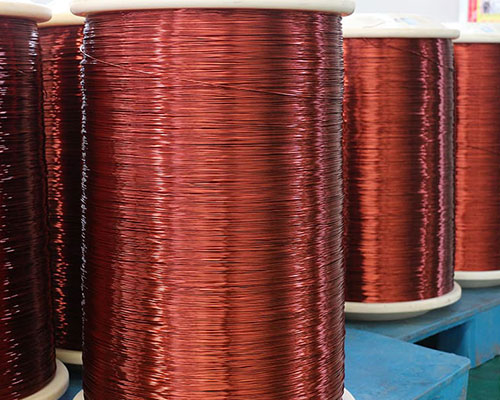
The combination of the dual-coat construction PAI base layer and PI top layer on the copper conductor has offered a robust unique combination of mechanical strength, electrical insulation and thermal stability for the harsh high-temperature applications.
Key Technical Specifications
| Property | Typical Value |
|---|---|
| Conductor Material | Copper |
| Insulation System | PAI + PI |
| Thermal Class | 220°C |
| Shape | Round |
| Voltage Resistance | Excellent |
| Abrasion Resistance | Excellent |
| Solvent Resistance | Excellent |
| Corona Resistance | High |
| Applicable Standards | IEC, NEMA, JIS |
| Diameter Range | AWG 4 – AWG 44 |
Advantages of Choosing PAI and PI-Coated Magnet Wire?
Outstanding Thermal Performance
Withstands continuous operation up to 240°C without insulation breakdown, extending motor life in high-ambient environments.
In many factories, a significant number of industrial motors and generators are subject to winding temperatures greater than 180dc. Traditional insulation systems would not last long in these circumstances and would require frequent replacing.
PAI/PI insulation systems provide:
Stable performance under repeated thermal cycling
Enhanced thermal aging durability
Lower risk of insulation failure
The use of more durable equipment.
High dielectric integrity under heat
Refrigerant and solvent resistance
Superior Corona Resistance
Thermally reliable equipment is essential when manufacturers develop small, high-power-density equipment.
PAI/PI Magnet Wire vs Other Insulation Systems
| Insulation Type | Thermal Class | Typical Application |
| PEW | 155°C | General Electrical Equipment |
| UEW | 180°C | Transformers and Small Motors |
| EIW | 200°C | Industrial Motors |
| PAI | 220°C | High-Temperature Motors |
| PAI + PI | 220°C+ | EV, Aerospace, Wind Energy |
PAI vs PI-Coated Wires: Detailed Comparison
| Feature | PAI-Coated Wires | PI-Coated Wires |
| Thermal Rating | 220°C, good for motors | 240°C+, excels in >150°C extremes |
| Adhesion | Strong to copper | Weaker, often needs overcoats |
| Moisture Resistance | Higher absorption (up to 5%) | Lower, better reliability in humid conditions |
| Mechanical Strength | Abrasion/chemical resistant | Stiffer, high dielectric but less flexible |
| Cost & Processing | Varnish-applied, cost-effective | Extrusion possible, premium pricing |
PAI-coated round magnet copper wires have toughness as top priority and PI-coated copper magnet wires peak to the best in class heat endurance. This can be carried through to the hybrids like Thermax PI/PAI rectangular wires (also available in a round version) that go a step further to maximize EV efficiency.
Compliance & Certifications
IEC 60317 9 International standards for enameled winding wire provide dimensional and electrical specifications.
NEMA MW 1000 N. American standard for class 105(c) magnet wire and film build classification.
JIS C3202 Japanese Industrial Standard cited by customers looking for Japanese OEM motor lines.
UL recognition files for equipment that uses UL listed parts and then has the performance tested to these listed flammability and thermal safety properties by a third party.
RoHS / REACH If the wire is to be sold into EU markets or a OEM supplied with restricted substance supply chain standards.
Why Choose LP Industry as Your Magnet Wire Supplier?
LP Industry is engaged in manufacturing of high performance magnet wire made available for tough industrial application.
Our advantages include:
More than 30 years manufacturing experience
High end enameling production lines
Ghd Strict quality control procedures
For the production systems which are certified according to ISO
Varied diameter and insulation solutions
Factory-direct prices that beat competition
Quick worldwide location of delivery done in a fraction of second, which make easy to respond to several questions.
OEM & ODM support
Technical engineering support
If you‘re designing anything from EV motors to industrial generators to transformers or even aerospace equipment, our engineering team can engineer the exact magnet wire products for you.
Frequently Asked Questions
What is a magnet wire with the coating of PAI?
Magnet wire with PAI coating: The wire insulation in PAI-coated magnet wire is polyamide-imide. This insulation offers strength and high heat resistance.
What exactly is PI-coated magnet wire?
PI coated magnet wire makes use of a Polyimide insulation, characterized by superlative high temperature and dielectric properties.
Thermal class of PAI and PI coated wire would be?
The majority of PAI and PI coated magnet wire are Class 220.
Ev Motor wire_ok is this the right wire for EV motors?
Yes. It is one of the most common in traction motors of electric vehicles for its electrical and thermal properties.
Are custom diameters available to purchase?
Yes. Standard conductor sizes and wire insulation thicknesses can be customized according to the needs of the project.
Do we have samples?
Most manufacturers are willing to supply samples for qualification and testing.