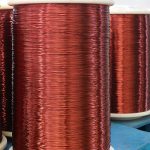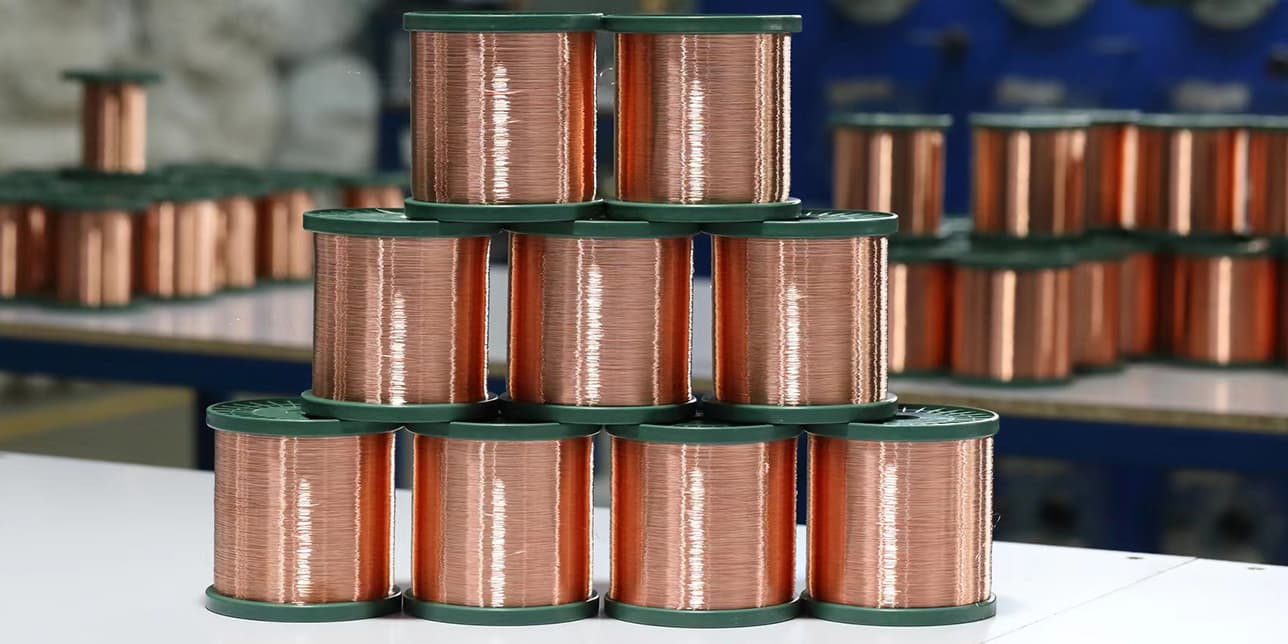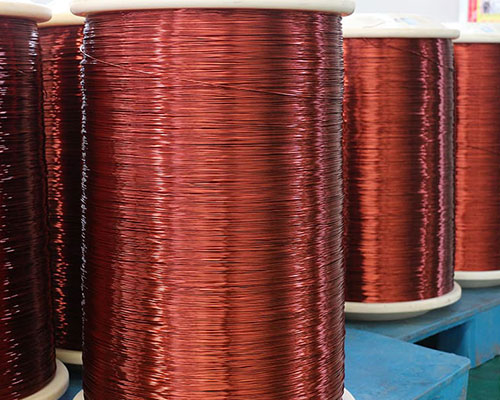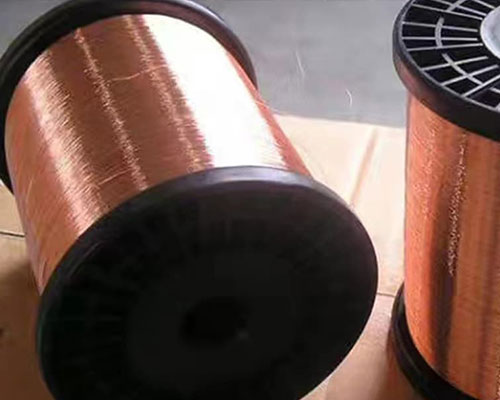
2UEW 180 0.03mm size enamel Round copper wire is ultra-fine enameled copper wire often uses in limited space applications. And it also uses in a high level of precision because of extremely small diameter and a thin enamel. This wire commonly uses in applications where compact size and precise winding are essential.
2UEW 180 0.03mm Size Enamel Round Copper Wire data:
| Name | Enameled Round Copper Wire |
| Conductor | Copper |
| Dimension | 0.03mm |
| Thermal Class(℃) | 180 (Class H) |
| Insulation Thickness | G2 |
| Certification | UL |
| Standard | IEC, NEMA, GB, JIS |
| Packing | 5kg per roll, plastic rool |
| Application | Speaker coils, voice coils, etc. |
Common uses and characteristics of ultra-fine enameled copper wire
Electronics Miniaturization: The ultra-fine nature of this wire makes it suitable for applications where miniaturization is crucial. It commonly uses in small electronic devices where space is at a premium, such as smartphones, tablets, and wearable technology.
Coil Windings in Micro Motors: Due to its small size and excellent electrical properties, ultra-fine copper wire uses in the micro motors. These motors use in medical devices, robotics, and precision instruments.
Microelectronics: suitable for the intricating and compacting coil windings of microelectronic components and integrated circuits..
Sensors and Transducers: where precision in winding and compact design are essential for the sensor’s sensitivity and performance.
Medical Devices: such as hearing aids, pacemakers, and other implantable devices, where space constraints and precision are critical.
Communication Devices: Uses in coil windings of communication devices.
Research Instruments: Precision instruments and scientific equipment often require ultra-fine wiring for specialized applications. This type of wire is suitable for creating intricate coil windings in these instruments.
Aerospace Applications: The lightweight and compact nature of ultra-fine enameled copper wire makes it suitable for certain aerospace applications where weight reduction and space efficiency are critical considerations.
High-Frequency Devices: Due to its excellent electrical properties, uses in high-frequency signals are involved, such as RF (radio frequency) circuits and antennas..
Automotive Electronics: In modern vehicles, particularly in coil windings and connections of electronic systems and sensors.