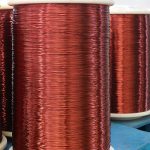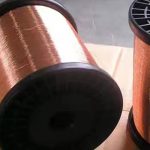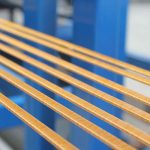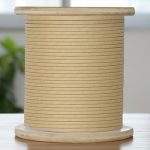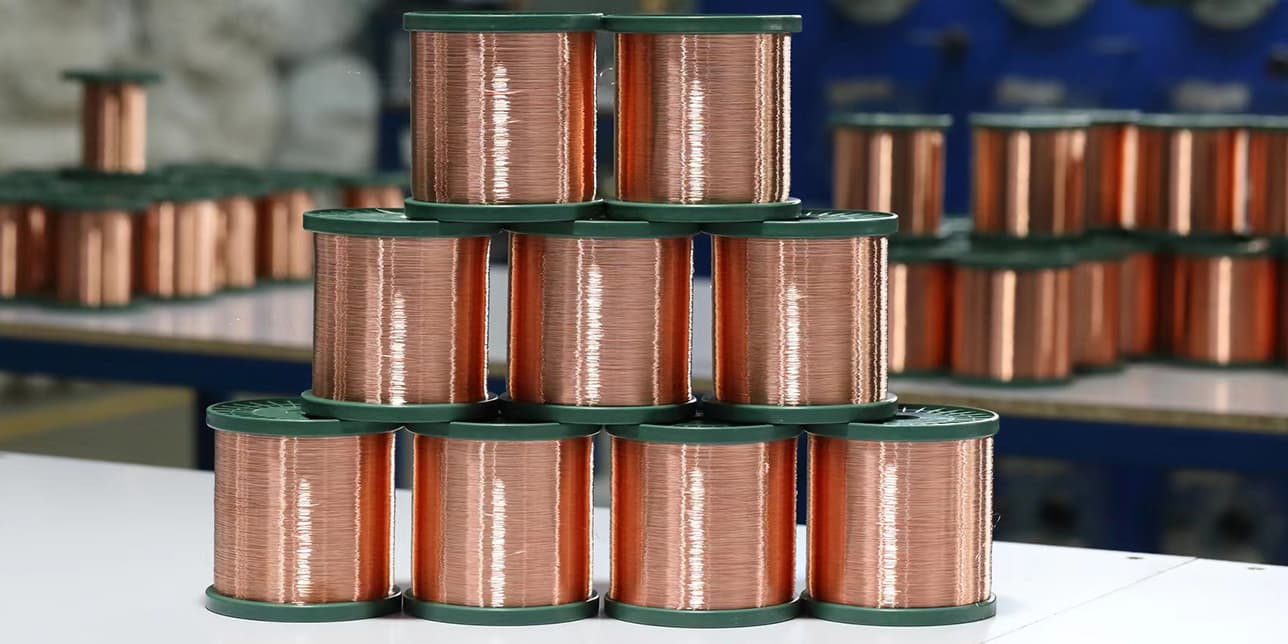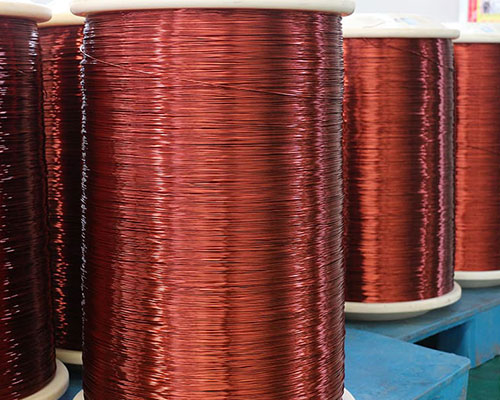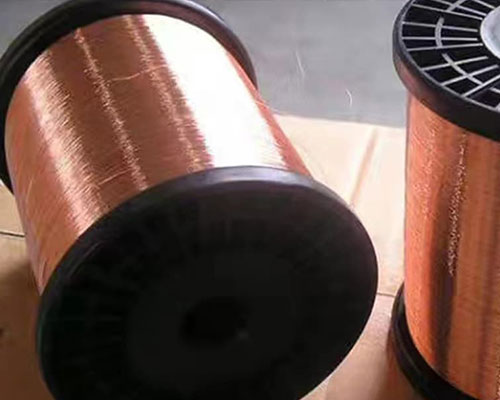
Looking for a light, inexpensive replacement for copper in your next winding? Enameled aluminum wire in 28 gauge provides electricalperformance and mechanical reliability equal to that of copper, at about 70% of the weight of the same wire gauge copper.
What Is 28 Gauge Enameled Aluminum Wire?
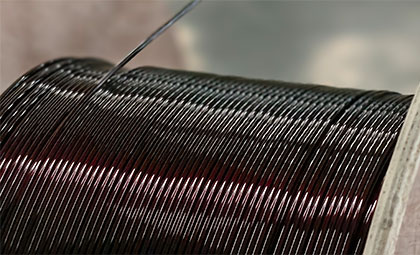
28 gauge enameled aluminum wire: an insulating coating on a round aluminum conductor of a diameter of roughly 0.32 mm (bare) when used as an electromagnetic winding. The film of enamel (usually polyester, polyesterimide or polyamide-imide) insulates the individual turns from one another when wound into a coil. Since aluminum is a third of the density of copper, this conductor reduces winding weight by this factor while maintaining the conventional 28AWG dimensional tolerances. Uses include any wound that needs to generate or respond to a magnetic field: small motors, transformers, speakers and inductors. For OEMs fighting material costs versus the flexibility of aluminum as a material in response to the fluctuations in copper prices, this is a defined-spec alternative that still meets the thermal and dielectric specifications for low-to-moderate current windings.
How It Works?
The aluminum core is the conductor, the enamel film electrically separates each turn of the wound coil from the other so it doesn‘t short out. During baking the film becomes cross-linked into a hole free continuous layer that can survive the bend stress of high speed coil winding. Thickness of the film is monitored to a pre-defined build up Grade 1 (single) or Grade 2 (heavy) which then defines the dielectric breakdown voltage and the target final outside diameter. This is where the importance lies, because it is the defect free, consistent layer that defines how long the coil will last under thermal cycling and voltage stress.
Key Specifications
| Property | Typical Value / Feature |
| Conductor Material | 99.7% Pure Aluminum |
| Gauge (AWG) | 28 |
| Diameter (approx.) | 0.32 mm |
| Insulation Type | Polyurethane (UEW) or Polyester (PEW) |
| Thermal Class | 155°C / 180°C optional |
| Color Options | Natural, Red, or Custom |
| Spool Length | 100 m / 500 m / Customized |
| Standard Compliance | IEC 60317 / JIS C3202 / NEMA MW-82-C |
Applications & Use Cases
28 gauge enameled aluminum wire is used in coil designs where weight/cost are more significant than maximum conductivity. Applications for this are when the current load is within the practical limits of aluminum and when total winding weight directly influences product cost or freight.
For small fractional-horsepower motor stators and rotors
Distribution and control transformer secondary windings
Solenoid Coils for Relays & Valves
Ballast and choke coil winding
Speaker voice coils for “cheap” audio products
Electromagnetic coils for sensors and actuators
Power supply modules inductor winding
Low-voltage ignitionsignal coils
28 Gauge Aluminum Wire vs. 28 Gauge Copper Wire
| Factor | 28 AWG Aluminum | 28 AWG Copper |
| Weight (relative) | ~30% of copper weight | Baseline |
| DC resistance @ 20°C | ~340–360 Ω/km | ~210–225 Ω/km |
| Material cost trend | Lower, more stable | Higher, more volatile |
| Current-carrying capacity | Lower per mm² | Higher per mm² |
| Best fit | Weight- or cost-driven, lower-current windings | High-current density, premium-performance windings |
Aluminum is the superior selection if weight and material cost is more important than overall conductivity, especially if high current density is to be used. Copper is the superior selection if coil size has to be kept minimal at higher current densities (electricity capacity).
Compliance & Certifications
28 gauge enameled aluminum wire is produced to IEC 60317 dimensional and electrical standards, which provides the baseline for the diameter and breakdown voltage market researchers, with the most common spec expectations for international purchase. NEMA MW 1000 compliance can serve as a purchase variable for international customers designed for North American motor and transformer assembly. JIS C3216 compliance is available for international customers designed for Japanese OEMa. RoHS, and REACH compliance is confirmed for export within the EU and other regulated areas.
Why Choose Enameled Aluminum Wire Instead of Copper?
| Feature | Aluminum Wire | Copper Wire |
| Weight | 3 times lighter | Heavier |
| Cost | 30–50% lower | Higher material cost |
| Conductivity | ~61% of copper | 100% reference |
| Flexibility | Easier to shape | Slightly harder |
| Thermal Stability | Excellent with proper enamel | Excellent |
| Applications | Motors, transformers, speakers | Motors, transformers, electronics |
Conclusion: For many applications, enameled aluminum wire offers the best balance of performance, cost, and weight, especially in large-volume coil production.
All products comply with ISO, CE, RoHS, and Reach standards, ensuring stable electrical performance and long-term durability.
Why Choose LP?
✅ 30+ years of export experience
✅ Professional technical support for custom winding solutions
✅ Fast delivery and secure packaging
✅ OEM / ODM customization available
✅ Global clients in 60+ countries
Frequently Asked Questions
Q. Can 28 gauge enameled aluminum wire substitute for copper in a motor winding?
Yes, in low-current, lower weight or lower cost applications Aluminum has higher resistance so the winding will need to be selected for the actual application load (not just converted directly from copper).
Q: Which thermals class should I declare?
Specify according to the rating of your motor or transformer insulation system. 180 degreesC polyesterimide is suitable for most general industrial winding; select 220 degreesC polyamide-imide for high-ambient or high-duty-cycle applications.
Q: aluminum wire can be soldered?.
All standard enamel grades need to be mechanically stripped prior to soldering. If your terminal assembly process involves direct solder, with no removal of the insulation, then ask for a solderable enamel grade.
Q: What is the typical resistance of 28 AWG aluminum wire?
Is about 340–360 Ω/km at 20 degreesC, around 1.5 times the resistance of 28 AWG copper. Doublecheck and confirm the precise value with your supplier as there is some slight variation by alloy and draw process.
Q: Does aluminum wire need different winding equipment than copper?
Not usually, but the tension settings should be changed anyway as aluminum is not as strong as copper in tensile strength for the same gauge. Too much tension might cause the conductor to elongate or break when winding at high speeds.
Request for a Quote / Make Contact
28 gauge enameled aluminum wire provides copper comparable winding performance at a fraction of the weight and cost exposure. Ask us for custom specs, thermal class options, and volume pricing. Our team responds within 24 hours with technical datasheets and lead time projections.